
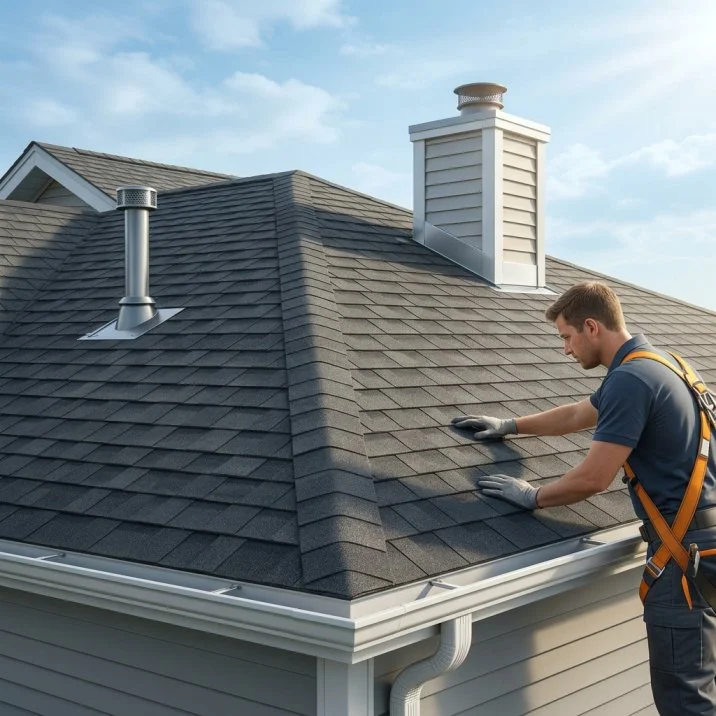
Weather shortens a roof’s lifespan through continuous UV radiation, moisture retention, thermal expansion, and physical storm impact. Regular roof inspections and routine maintenance prevent minor weather damage from turning into costly leaks.
Most homeowners don’t realize how much weather can impact their roof. We understand that the first step to protecting your roof’s life is to know how the sun, rain, wind, hail, snow, and temperature changes impact roofing materials over time.
Although a well-installed roof will last for a long time, it will eventually need repairs due to weathering. Periodic roof inspection and maintenance can help avoid the development of minor weather issues into costly repairs. This knowledge will also help you to determine when you need to call a roofing expert to come in and inspect your roof as opposed to waiting until you see a leak in your home.
The Impact Of Weather On Your Roof
Materials used for a roof will naturally deteriorate over time because it is always outdoors. The rate of degradation is dependent on the type of roofing material, installation, ventilation, maintenance, and the local weather conditions.
Exposure To The Sun And UV Rays
The sun’s rays can cause roofing materials to decompose over time. Shingles may become brittle, crack, fade, and lose flexibility in ultraviolet radiation.
Dark roofing materials can also absorb a considerable amount of heat, which can result in higher roof and attic temperatures. Excessive sun exposure over the years may lead to premature aging.
This is not to say that the sun will be out to get your roof. Instead, exposure to continuous UV will gradually decrease the material’s resistance to other weather conditions.
Rainfall And Wetness
One of the most apparent hazards to a roofing system is rain. Damage to shingles, deterioration of flashing, failure to drain, and failure to seal penetrations can all allow water to enter.
Water can also accumulate under roofing materials, causing problems to the roof deck and other structural elements when exposed to moisture repeatedly.
Regular checks can be used to identify the problem areas before they get worse and become a bigger moisture problem. If you notice stains on the ceiling, damp insulation in the attic, peeling paint or musty odors, it’s time to call in the professionals.
Strong Winds
Shingles are vulnerable to being blown off, loosened, or torn by wind, especially if they are already weakened by the passage of time or previous weather events. Damage doesn’t always mean that a roof has to have big chunks of shingles blown off. Just a couple of lifted edges can form openings through which wind-driven rain can enter the building.
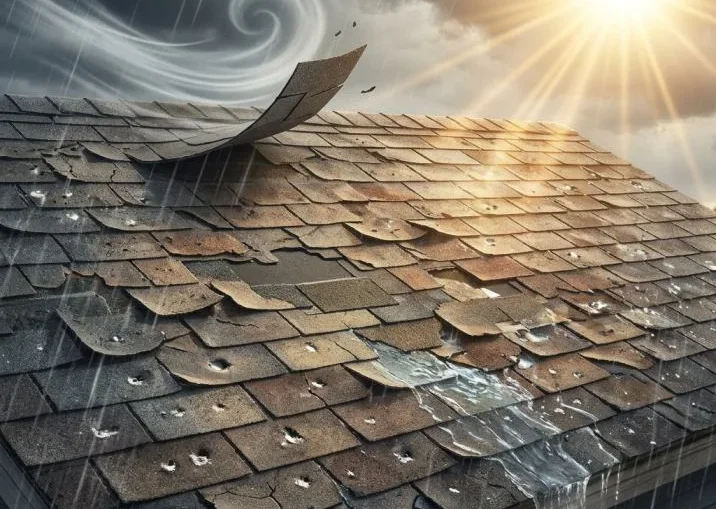
Hail and Impact Damage
Weather damage to the roof may not be apparent, which can be caused by hail. Cracks, bruising, or granule loss can occur on shingles due to impacts.
If there is a substantial hailstorm, it may be advisable to schedule an inspection to determine if repairs are needed. Early intervention can avert leaks or larger-scale deterioration.
Temperature Changes
The roofing material will expand and contract with the changes in temperature. Shingles, flashing, sealants, and other elements may be stressed through repeated cycles.
This is especially relevant in areas where there are large temperature variations. As the materials age, their strength can decrease, or they may no longer be able to maintain a good weather-resistant barrier.
Snow and Ice
Winter weather can cause snow to accumulate on a roofing system, which can add weight to a roofing system in areas that see winter weather. Melting and refreezing may be another cause of drainage issues related to ice.
Accumulation of ice around the edges of roofs may cause water to not drain properly. If moisture is able to seep through the roofing materials under a roof opening, this can lead to leaks and damage to the interior.
How Roof Maintenance Can Help Extend The Lifespan Of A Roof?
The basic maintenance program should consist of:
- Having expert roofers check the roof periodically
- Inspecting shingles for missing, cracked, or curling shingles
- Keeping gutters and downspouts clear
- Checking chimney and vent flashing around the house
- Attic water leak check
- Cleaning up debris that is left on the roof
- Trimming nearby tree branches
- Checking roof ventilation
